Timing: 10 am to 9 pm. Last entry at 8 pm.
Museum is Closed on Monday & National Holidays

Humayun World Heritage Site Museum, Nizamuddin,
Sunder Nursery, New Delhi, 110013
Follow:


.jpg)
.jpg)
.jpg)
.jpg)
.jpg)
On 29-July 2024, India’s Honourable Minister of Tourism and Culture, Shri Gajendra Singh Shekhawat, and Prince Rahim Aga Khan inaugurated a state-of-the-art sunken museum at the iconic 16th-century Humayun’s Tomb Complex in the heart of the nation’s capital.
The museum, developed by the Aga Khan Trust for Culture (AKTC) in partnership with the Archaeological Survey of India, is the culmination of 25 years of conservation efforts in a 300-acre site that encompasses Humayun's Tomb, Sunder Nursery and the Nizamuddin Basti. The museum takes visitors on a captivating journey through seven centuries of Nizamuddin’s rich heritage via a blend of digital experiences, gardens, and galleries that shed light on an important period of India’s history. The building serves as an underground bridge connecting the Humayun’s Tomb complex with the adjacent Sunder Nursery. It also includes a 100-seat auditorium, temporary galleries, and spaces for cafés, meeting rooms, and a library.

.jpg)

The unbroken history of Seven centuries

The many facets from his life

Its origins, significance, and grandeur

Its gardens and the conservation
effort undertaken here

The cultural icons associated who lived and died here

His multifaceted life as a courtier, writer, poet, musician
Humayun's Tomb Museum was conceived to provide a platform and environment which serves as a catalyst to initiate conversations on art, culture, history, and heritage. To facilitate these interactions, the Museum welcomes you to choose from a wide array of events and exhibitions held regularly in its Auditorium, exhibition galleries, and open courtyards. To book from one of the venues in the Musuem and Sunder Nursery park, please write to: contact@htmuseum.org
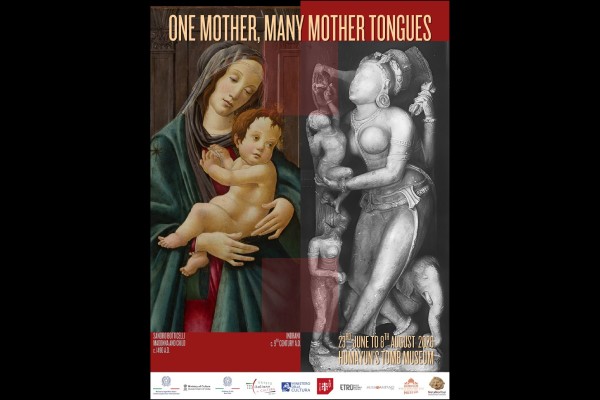
The image of the mother with a child constitutes one of the most persistent visual narratives in human history. A range of deities and rituals addressed the perils of pregnancy, birthing and the fragility of infant life in ancient societies. Artworks found across cultures repeatedly establish mothers as divine progenitors, entrusted with fertilising, renewing and protecting not just the young, but society as well. This exhibition explores these ideas transculturally — to see how a universal theme can be read locally — revealing as much of each region and period’s history as it is of the migration of people that spread these ideas across distant eras and geographies.
The emblematic works that make up this exhibition, each come from rich contexts. A comparative reading of these contexts reveals relevant transformations in religion, patronage and society. The exhibition is arranged chronologically and invites the visitor to recognise religious and stylistic differences, alongside the archetype of motherhood as a foundational act — a collective emblem, referencing both, a psychological and spiritual experience. It is a gesture that holds together fragility and hope, memory and future.
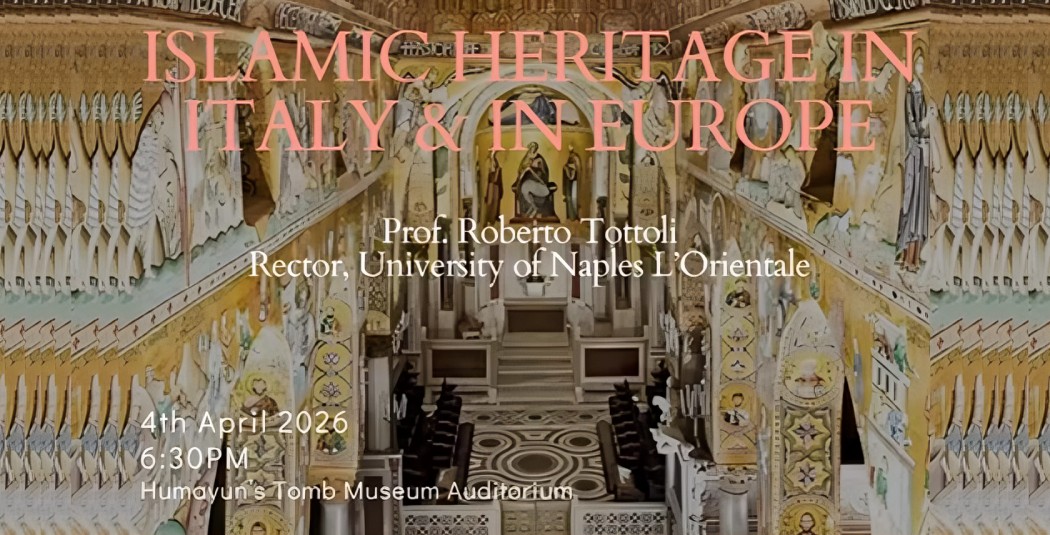
In connection with the Shared Stories exhibition, Prof Roberto Tottoli, Rector, University of Naples L' Orientale will lecture on Islamic Heritage of Italy and Europe on 4 April 2026 at the Humayuns Tomb Museum Auditorium.
Dr Tottoli has a degree in Oriental Languages and Literature from Ca' Foscari University of Venice (1988), PhD from L'Orientale University of Naples (1996). He studied at the Hebrew University of Jerusalem (Lady Davis Fellowship) under the supervision of M.J. Kister (1993-94), and then taught in Turin (1999-2002) and at L'Orientale University of Naples since 2002, where he has been full professor of Islamic Studies since 2011.
The lecture is part of the series of expert talks organized in the Auditorium of the Humayun's Tomb Museum, Nizamuddin built by the Aga Khan Trust for Culture in partnership with the Archaeological Survey of India.


“Insofar as civilisations manifest and express themselves through their art, museums have an essential role to play in teaching understanding, respect, and appreciation and ensuring that whole populations are given fresh opportunities to make contact with each other, using new, modern methods imaginatively and intelligently to bring about truly global communication.”
- His Highness the Aga Khan
“Museums and historic landmarks preserve and reveal the story of humanity. Inherently, they are places that foster connections among people as we delve into our collective, intricate past, and consider how we can collaboratively shape a united and better future,” said Prince Rahim Aga Khan at the inauguration. “The Museum thus serves as a link, not only joining Humayun’s Tomb and Sunder Nursery, but also bridging the gap between history and the present.”
The museum, developed by the Aga Khan Trust for Culture (AKTC) in partnership with the Archaeological Survey of India, is the culmination of 25 years of conservation efforts in a 300-acre site that encompasses Humayun's Tomb, Sunder Nursery and the Nizamuddin Basti. Since 2007, more than 60 monuments have been preserved, some 20 of which are on the World Heritage list. In 2018, the Sunder Nursery was opened, providing an oasis of greenery and calm to the citizens of Delhi. Today, these sites receive more than 3 million visitors per year.
The Museum built at the entrance of the World Heritage Site not only enhances visitor experience, but also allows for a better understanding of Nizamuddin Area’s architecture and building craft traditions; shed light on the development of the area over seven centuries; and, most significantly, explain the pluralist Sufi cultural traditions that defined Hindustani culture. It aims at enhancing visitor experience and provides an opportunity to host collections on art, architecture and culture and become a model for other such facilities across the country.
Humayun's Tomb Museum aspires to promote an understanding of the cultural and aesthetic practices that flourished during the Mughal era, and create a contemporary experience worthy of a 21st century addition to this extraordinary World Heritage Site.


Our Museum team will help in enriching your visit by connecting you to the guides for a curated walk.
contact@htmuseum.org


Timing:10 am to 9 pm. Last entry at 8 pm.
Museum is Closed on Monday & National Holidays.Contact: 011-40700 700


Explore the Museum and its various venues which can be rented for cultural and educational events.
events@htmuseum.org


Ticket Info
Indian / SAARC Citizens - Rs 50/-
Children (5-12 years) - Rs 25/-
Other Nationalities - Rs 300/-

Humayun’s Tomb Museum has been designed as a Gateway – a Connecting Point located at the juncture of three historically connected sites: Humayun's Tomb and its Gardens, Hazrat Nizamuddin Basti, and the Sunder Nursery.

Following a decade-long revitalisation efforts undertaken by the Aga Khan Trust for Culture, which included the conservation of monuments, restoration of parks and gardens and related socio-economic projects in neighbouring districts, in 2015 work began on the construction of Humayun’s Tomb Museum. The building is built at the entrance of the Humayun’s Tomb World Heritage Site and aims to enhance visitor experience; allow a better understanding of Mughal architecture and building craft traditions; shed light on the development of the Nizamuddin area over a millennium; and, most significantly, explain the pluralist Sufi cultural traditions that defined Hindustani culture for at least five centuries.


“Humayun’s Tomb Museum has been designed as a Gateway – a Connecting Point located at the juncture of three historically connected sites: Humayun's Tomb and its Gardens, Hazrat Nizamuddin Basti, and the Sunder Nursery.
In connecting these sites, the Museum will also serve as a bridge between the present and the past – linking the modern city of Delhi to its remarkable heritage – and thus providing a Gateway to a truly extraordinary period of human history.
That remarkable chapter in the human was a time of enormous accomplishment – and enormous significance…It was led by men whose talents in statehood and in military affairs were remarkable – and their impact was felt in virtually every dimension of human existence, both within the empire and outside...They were statesmen who would have excelled in any time.”
His Highness The Aga Khan
Speaking on the occasion of foundation stone laying ceremony for Humayun’s Tomb Museum, April 2015.
Read Full Speech
.jpg)
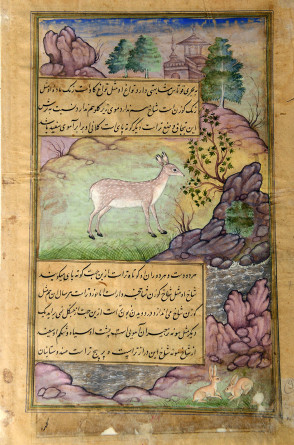
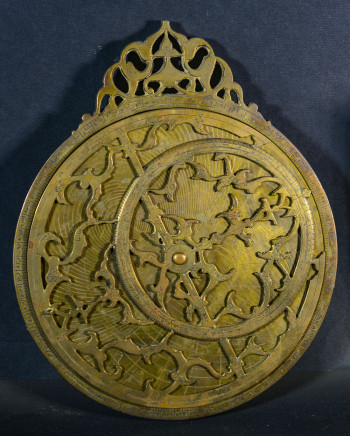
Apart from the never-seen-before collection from the National Museum, and ASI Museum, the Musuem will also showcase the grand restored copper finial of Humayun’s Tomb, as well as other original architectural elements recovered during the conservation effort undertaken at the Humayun’s Tomb complex. Reconstructions of prominent architectural elements of monuments and landscapes from the greater Nizamuddin area are also featured here, which will inform and inspire the visitors to visit these architectural gems in the area.
The Museum will enable visitors to experience the magnificent craft traditions that were introduced to India during this period and which continue to flourish in myriad ways. The illuminated plastered ceilings reflect the geometrical sophistication of the Mughal age.....


by Ebba Koch
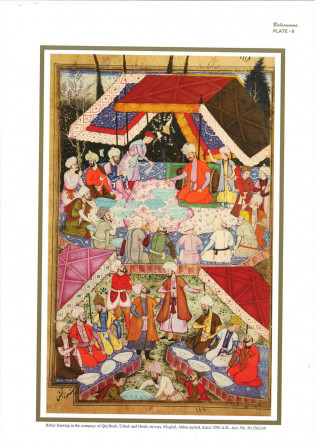
Humayun, the son of Babur and the second Mughal ruler, reigned in Agra from 1530 to 1540 and then in Delhi from 1555 to 1556. Until now, his numerous achievements,including winning back the throne of Hindustan, have not been well recorded. Humayun neither wrote an autobiography nor had a historian to glorify him; the eccentric accounts of his historian Khwandamir elude general comprehension.

by Aga Khan Trust for Culture
Humayun's Tomb, a magnificent 16th century monument, recently declared a World Heritage Site, has been the focus of a concerted restoration effort in the past several years. This conservation effort, co-funded by the Tata Trusts from the onset, remains the only privately undertaken conservation effort at any of India's sites of national importance.

by DK and Aga Khan Trust for Culture
Take a walk through Sunder Nursery’s abundant biodiversity, marvel at the 13th century garden tombs or delve into the fascinating displays at the museum. DK Eyewitness Humayun’s Tomb, Sunder Nursery and Nizamuddin transports you to ancient times with its narrative of each sight’s historical significance. Alongside, it expertly blends informative insights into the scientific conservation and ecological preservation efforts taken to restore these monuments to their former glory with the aim to promote sustainable tourism. You can experience it all here, whether you love history, art, architecture, culture or nature.

by Aga Khan Trust for Culture
Abdur Rahim Khan-i-Khanan (1556-1627), referred to in Mughal records as the 'noble of nobles', was one of the Nine Gems of Emperor Akbar's court. Hailed upon his birth as a "pearl from the river of good fortune", Rahim Khan-i-Khanan distinguished himself as an unmatched soldier, statesman, patron and poet in the courts of three generations of Mughal emperors.

by Aga Khan Trust for Culture
Amir Khusrau is one of the greatest poets of the Persianate region comprising of South and Central Asia, Iran, and Asia Minor. He lived in Delhi (13th/14th century), in the period which saw an amazing influx of scholars, poets, artisans, Sufis, travellers, and merchants from Persianate Central Asia - the area and civilization ravaged by Chengiz Khan, the Mongol - to South Asia. He saw the merging of two great civilizations - Hindu and Islamic - and he wove them beautifully in his literary works, language, music, and local traditions. Jashn-e-Khusrau 2013: Celebrating the Genius of Khusrau celebrates the contributions of Khusrau in the making of the composite South Asian culture that has come to be known as Hindustani.



.jpg)